
World first
First humans to drive on another world
The claim: Apollo 15 astronauts Dave Scott and Jim Irwin drove the first Lunar Roving Vehicle across the Moon, the first vehicle ever driven by people beyond Earth
Verified

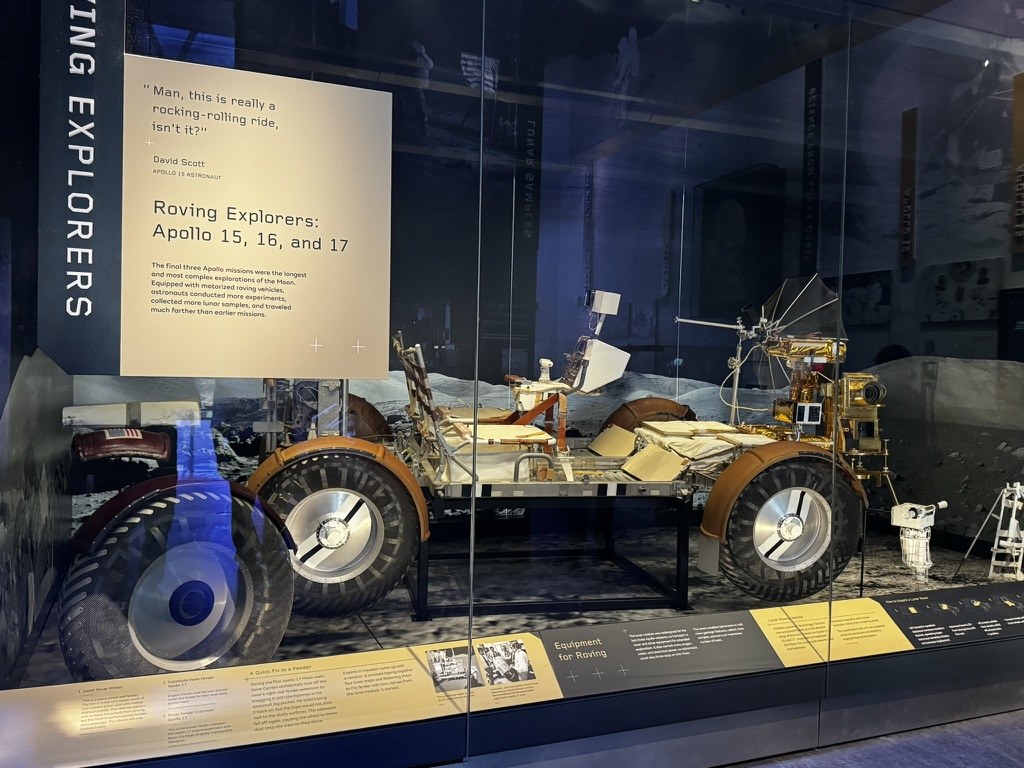
On July 31, 1971, at the Hadley-Apennine landing site, Dave Scott and Jim Irwin unfolded the battery-powered Lunar Roving Vehicle from the side of their lander, Falcon, and drove it to the edge of Hadley Rille. They were the first people to drive a vehicle on another world. The Soviet robotic rover Lunokhod 1 had been roaming the Moon since November 1970, but no one had ridden one.
Over three moonwalks the rover carried them 27.8 kilometers, as far as 5 kilometers from the lander, far beyond what earlier crews could cover on foot. It also carried a color TV camera that controllers in Houston could aim, so people on Earth could follow the exploration live. Two more rovers flew on Apollo 16 and 17, and all three are still on the Moon.
Dig deeper
Questions to explore if you want to go further. Each search link opens the question in ChatGPT in a new window.
Sources
On the Bookshelf
Books that tell the story behind this entry will be suggested here. Publishers: send us a copy.
Spot an error? Tell us. Corrections are made in public.