
World first
First rover evidence that liquid water once soaked Mars
The claim: Opportunity found rocks at Meridiani Planum that had formed in or been soaked by liquid water, the first such evidence gathered on the Martian surface
Verified

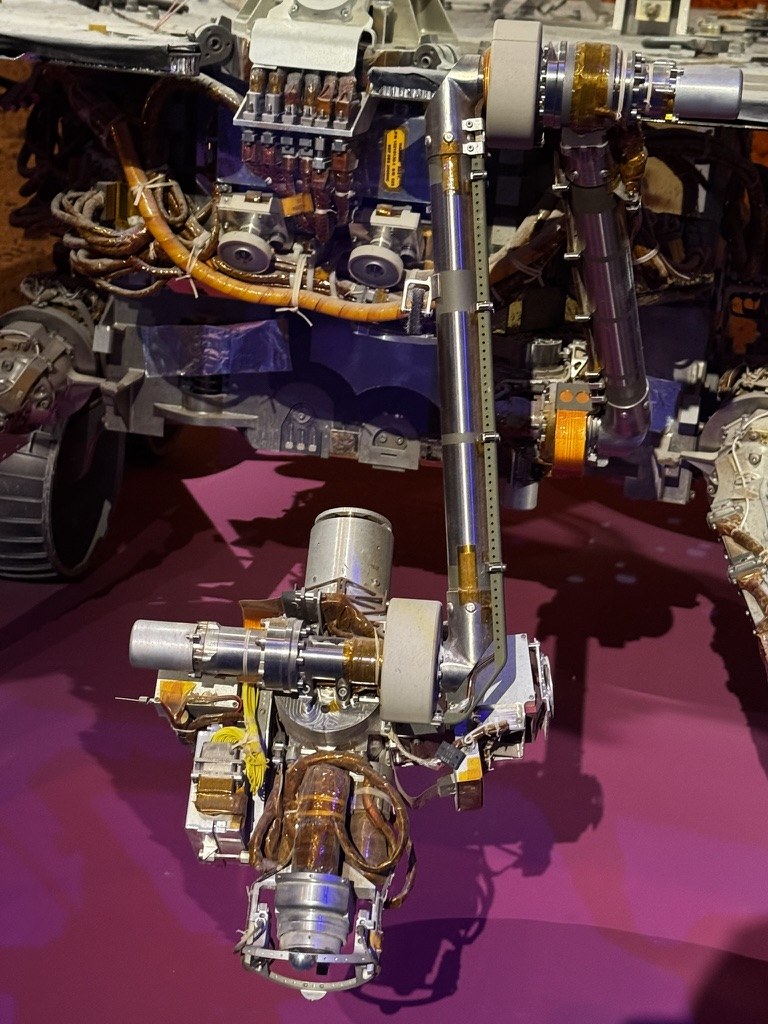
Opportunity happened to land in a small crater beside an outcrop of layered bedrock. Studying a slab nicknamed El Capitan with the instruments on its arm, it found jarosite, an iron sulfate that forms in water, heavy loads of salts, small cavities where crystals had dissolved, and BB-sized hematite spheres, the so-called blueberries. On March 2, 2004, NASA announced that the rocks had once been soaked in liquid water.
Orbiters since Mariner 9 had photographed dry channels on Mars, and an orbiter had spotted hematite at Meridiani from above, but this was the first time a spacecraft had examined the rocks themselves and found the chemical and physical signature of water. Opportunity kept adding to the case for 14 years; in 2011 it found bright veins of gypsum left by water flowing through cracks at Endeavour Crater.
Dig deeper
Questions to explore if you want to go further. Each search link opens the question in ChatGPT in a new window.
Sources
On the Bookshelf
Suggested reading: Roving Mars by Steve Squyres (2005). Read the booknote ›
Spot an error? Tell us. Corrections are made in public.