
World first
First search for life on another planet
The claim: Viking 1 scooped Martian soil into three onboard biology experiments, the first experiments built to look for living things on another planet
Verified

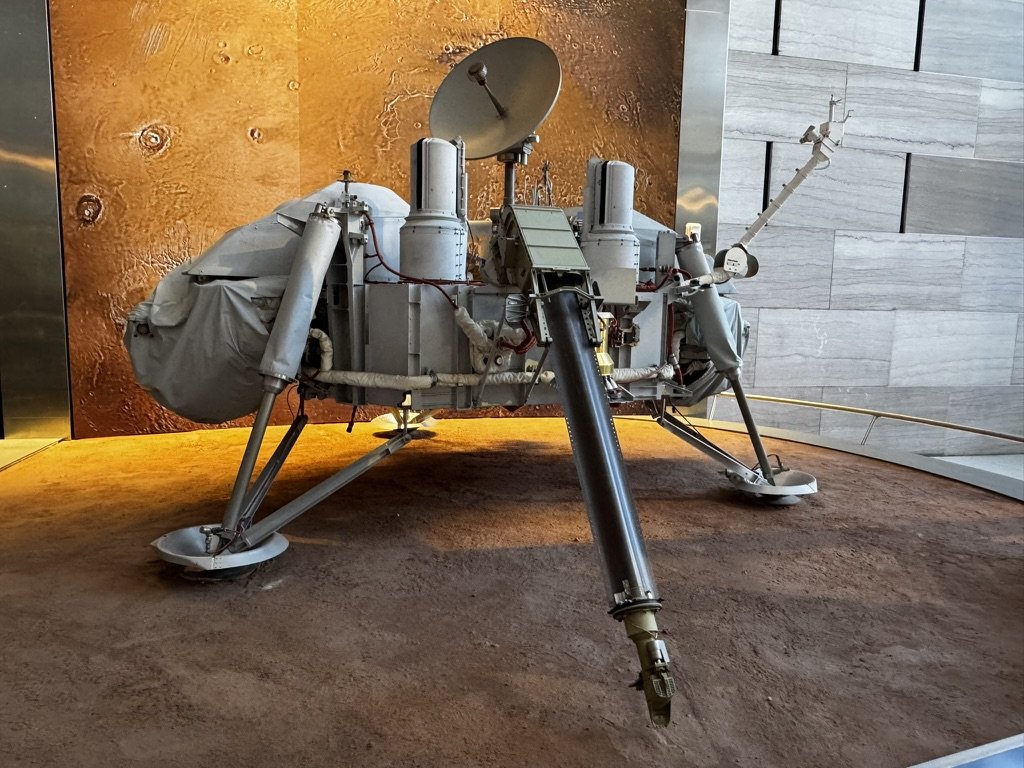
On July 28, 1976, eight days after landing on Chryse Planitia, Viking 1 reached out with its sampler arm, scooped up Martian soil and dropped it into a small laboratory inside the lander. Three biology experiments then fed, warmed or lit the samples, looking for gases that living microbes would give off, while a separate instrument searched the soil for organic molecules. No spacecraft before had carried experiments designed to detect life on another world.
The results puzzled everyone. One experiment, the labeled release, gave a signal that looked like metabolism, but the organic-molecule search found nothing, so most scientists concluded that unusual soil chemistry, not life, explained the readings. The experiment's designer, Gilbert Levin, argued for life until his death in 2021. In 2008 NASA's Phoenix lander found perchlorate salts in Martian soil, which may have destroyed organic molecules when Viking heated its samples. The puzzle helped steer later Mars missions toward first asking whether Mars was ever habitable.
Dig deeper
Questions to explore if you want to go further. Each search link opens the question in ChatGPT in a new window.
Sources
On the Bookshelf
Books that tell the story behind this entry will be suggested here. Publishers: send us a copy.
Spot an error? Tell us. Corrections are made in public.