
World first
First time two rovers explored another planet at once
The claim: With Opportunity rolling onto Mars to join Spirit, two mobile robots were exploring the surface of another planet at the same time for the first time
Verified
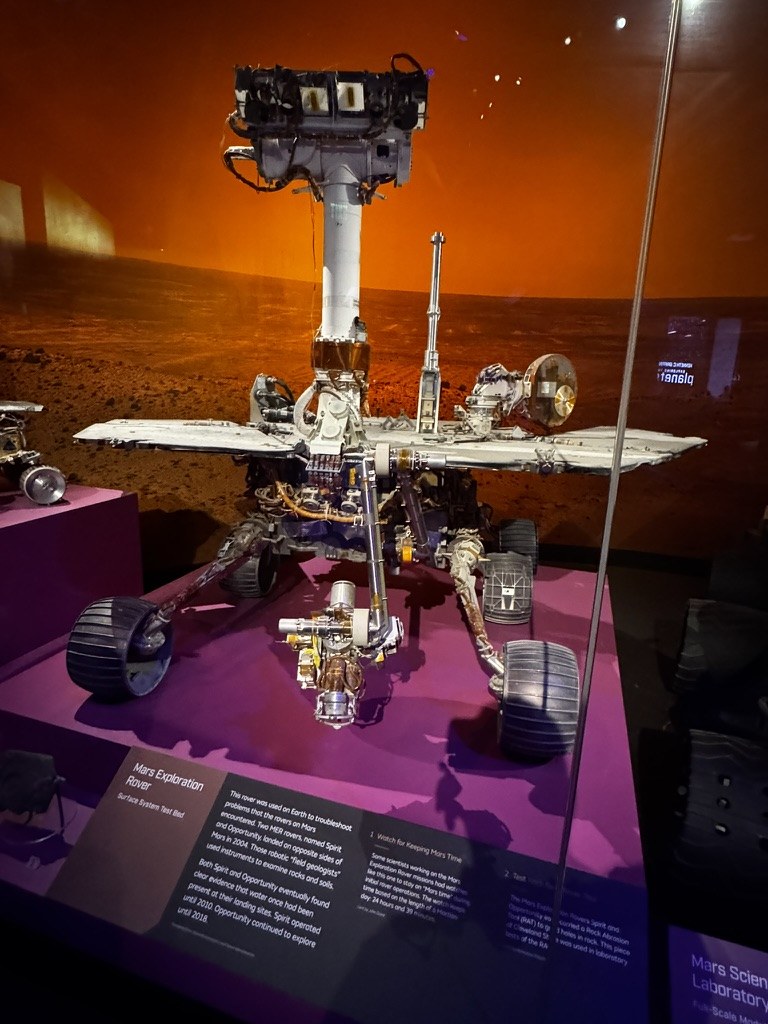
Spirit bounced down on its airbags in Gusev Crater on January 4, 2004 (UTC), and its twin, Opportunity, landed on the opposite side of Mars at Meridiani Planum on January 25. When Opportunity drove off its lander a week later, NASA had two mobile robots working on another planet at the same time for the first time. The Soviet Union's two Moon rovers, Lunokhod 1 and 2, had operated in different years.
Each golf-cart-sized rover was built for a 90-day mission. Spirit kept working for more than six years and Opportunity for more than 14, between them changing what scientists knew about water on early Mars. Running two rovers halfway around a planet from each other, with orbiters relaying their data, set the pattern for Mars surface missions since.
Dig deeper
Questions to explore if you want to go further. Each search link opens the question in ChatGPT in a new window.
Sources
On the Bookshelf
Suggested reading: Roving Mars by Steve Squyres (2005). Read the booknote ›
Spot an error? Tell us. Corrections are made in public.