
Santa Monica roots
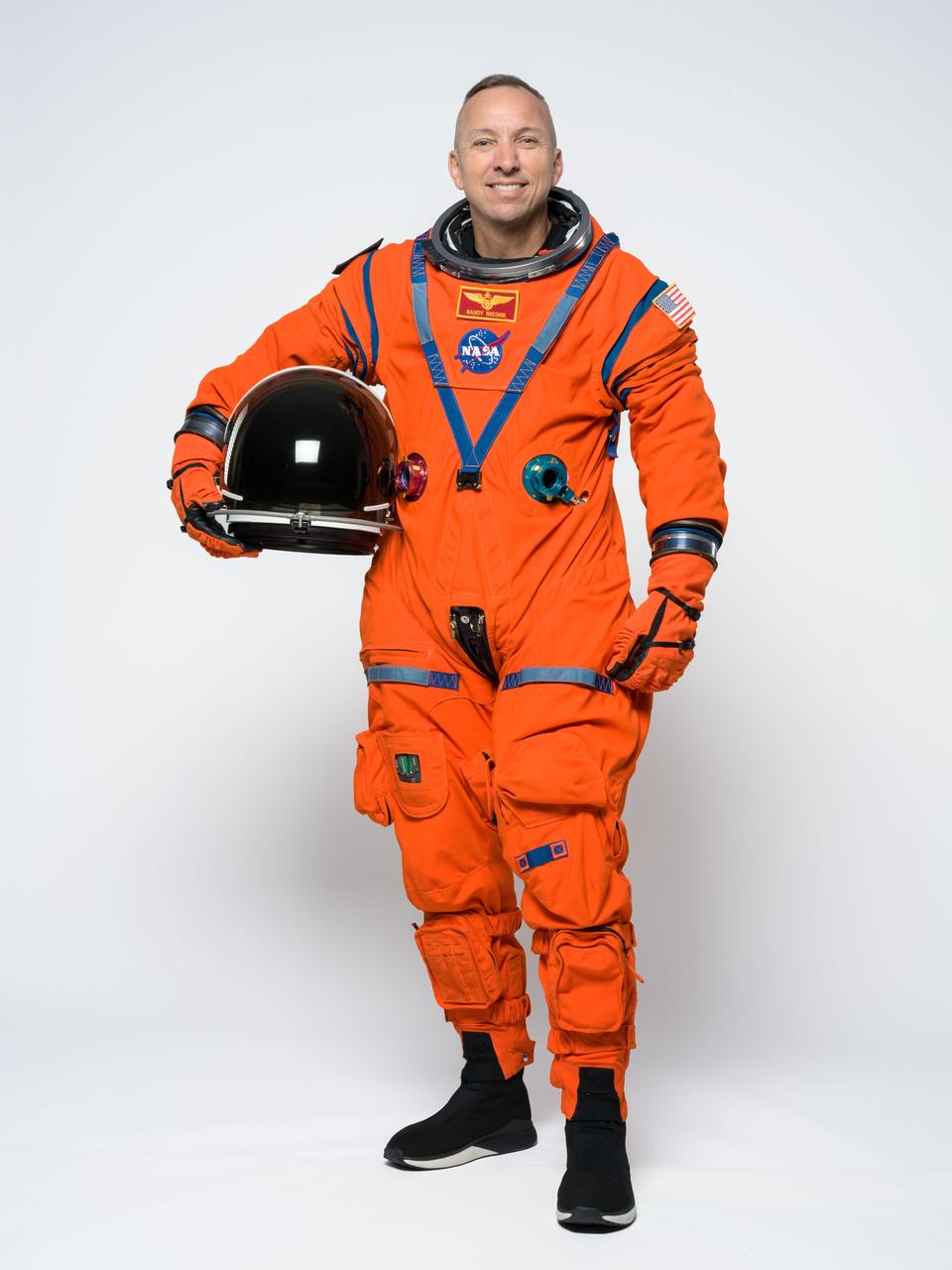
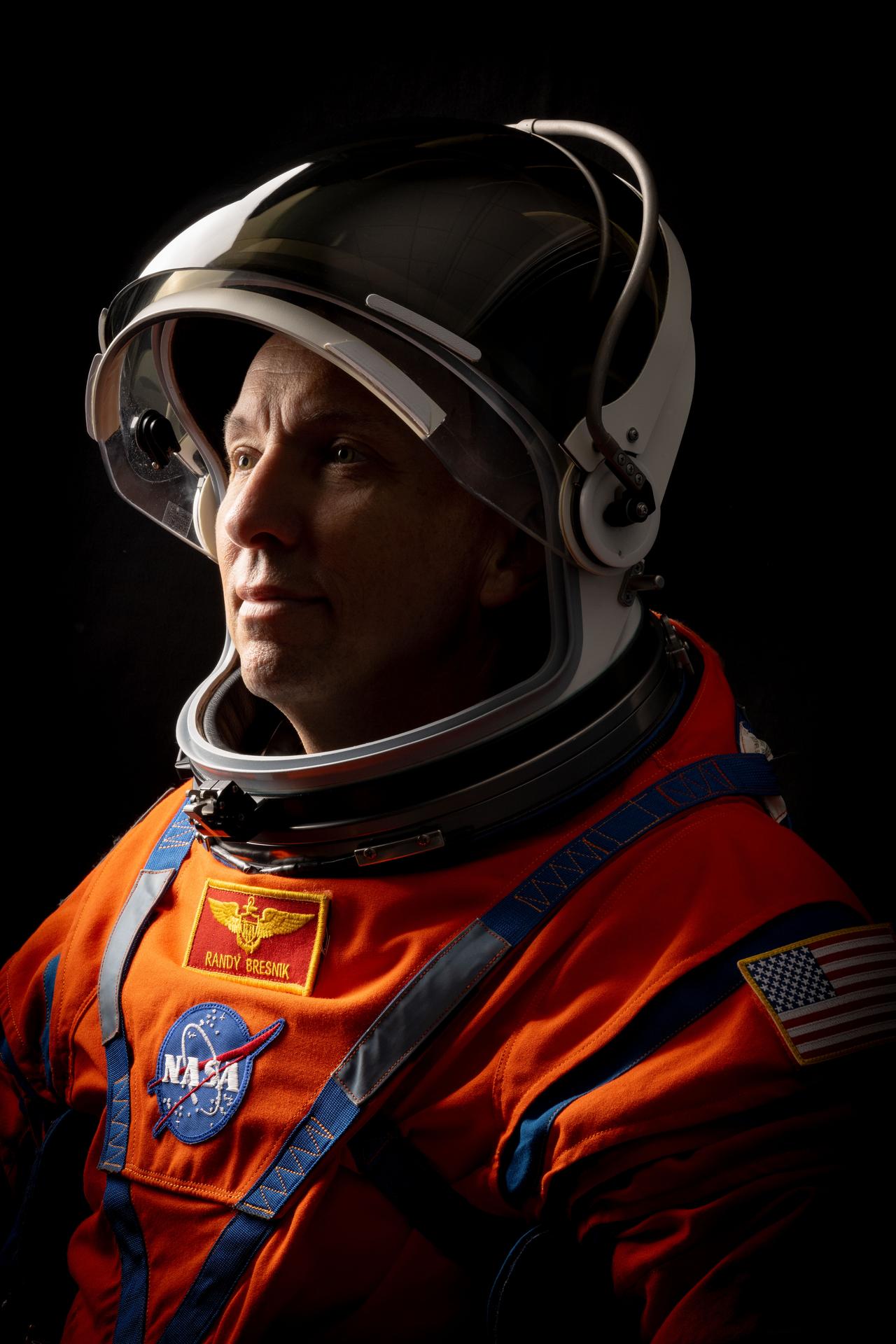
Bresnik was born at Fort Knox, Kentucky, on September 11, 1967, and grew up in Santa Monica, California, in a house under the traffic pattern of the Santa Monica airport. Aviation and photography ran in the family. His grandfather, Albert Bresnik, was Amelia Earhart’s personal photographer from 1932 until her disappearance in 1937.
He graduated from Santa Monica High School in 1985 and from The Citadel in Charleston, South Carolina, in 1989 with a degree in mathematics, receiving his Marine Corps commission through the college’s Naval ROTC program. He later earned a master’s degree in aviation systems from the University of Tennessee, studying at the UT Space Institute in Tullahoma (2002), and graduated from the Air War College (2008).
Marine aviator and test pilot
Bresnik was designated a naval aviator in April 1992 and flew the F/A-18 Hornet with Marine squadrons in Hawaii and California, making three Western Pacific deployments. He completed the Marine Corps Weapons and Tactics Instructor course and the Navy Fighter Weapons School, known as TOPGUN. At the U.S. Naval Test Pilot School, from which he graduated in December 1999, he won the Outstanding Student Award. He went on to work as an F/A-18 test pilot and instructor.
In 2003 he deployed to Kuwait and flew combat missions in Operations Southern Watch and Iraqi Freedom. By NASA’s count he has flown more than 7,000 hours in 95 types of aircraft, rotorcraft and gliders.
NASA, and a first flight on Atlantis
NASA selected Bresnik as an astronaut in May 2004, and he finished candidate training in February 2006. On the ground he served as a support astronaut on the shuttle closeout crew from 2009 to 2011, leading the closeout crew for the final shuttle mission, STS-135. From 2012 to 2015 he was NASA’s lead astronaut for its work with SpaceX on the crewed Dragon spacecraft, and he served as a capsule communicator in Mission Control.
He first flew as a mission specialist on STS-129, launched aboard Space Shuttle Atlantis on November 16, 2009. The crew, commanded by Marine Charles Hobaugh with Butch Wilmore as pilot, delivered two ExPRESS Logistics Carriers and about 30,000 pounds of spare parts to the station. They brought home Nicole Stott, the last station crew member carried by a shuttle.

He made two spacewalks. On November 21 he and Mike Foreman worked outside for 6 hours, 8 minutes, installing a grapple fixture on Columbus and other equipment. On November 23 he and Robert Satcher added 5 hours, 42 minutes. During the first, his wife, Rebecca, was in labor in Houston. Their daughter, Abigail Mae, was born at 11:04 that night, Houston time. Bresnik was the second NASA astronaut to become a father while in orbit; Mike Fincke was the first, in 2004. He also carried one of Earhart’s scarves to honor his grandfather. Atlantis landed at Kennedy Space Center on November 27 after 10 days, 19 hours and 16 minutes.
Between flights he trained in two analog environments. In September 2011 he spent six days underground in Sardinia on the European Space Agency’s CAVES course with Tim Peake, Thomas Pesquet, Norishige Kanai and Sergey Ryzhikov. In September 2014 he commanded NEEMO 19 in the Aquarius undersea habitat off Key Largo, Florida.
Commanding the space station
Bresnik launched on Soyuz MS-05 from Baikonur on July 28, 2017, with Sergey Ryazanskiy of Roscosmos and Paolo Nespoli of ESA. He served as an Expedition 52 flight engineer and took command of the station from Fyodor Yurchikhin at a ceremony on September 1. Expedition 53 began the next day, when Yurchikhin, Peggy Whitson and Jack Fischer undocked for home. No earlier ISS commander had served in the Marine Corps.
His three spacewalks dealt with one problem. In August a latching end effector, one of the two “hands” at the ends of the Canadarm2 robotic arm, had stalled. On October 5 he and Mark Vande Hei replaced it, in 6 hours, 55 minutes. On October 10 they lubricated the new unit and replaced cameras (6 hours, 26 minutes). On October 20 he and Joe Acaba installed more cameras, replaced a fuse on the Dextre robot and finished extra tasks (6 hours, 49 minutes). Those three outings brought his career total to 32 hours.

During the expedition the U.S. segment of the station also held four crew members for its first long stretch, which NASA said increased the time available for research. Bresnik handed command to Alexander Misurkin on December 13, and his Soyuz landed in Kazakhstan on December 14 after about 138 days, 17 hours in space.

Helping build Artemis
In August 2018 Bresnik became assistant to the chief of the Astronaut Office for exploration. In that job he represented the crew’s view in the design and testing of Orion, the Space Launch System, the lunar landers, Gateway, rovers and spacesuits. Our profile Carrying the Fire covers those years and why they mattered when NASA chose its Artemis III commander.
Artemis III
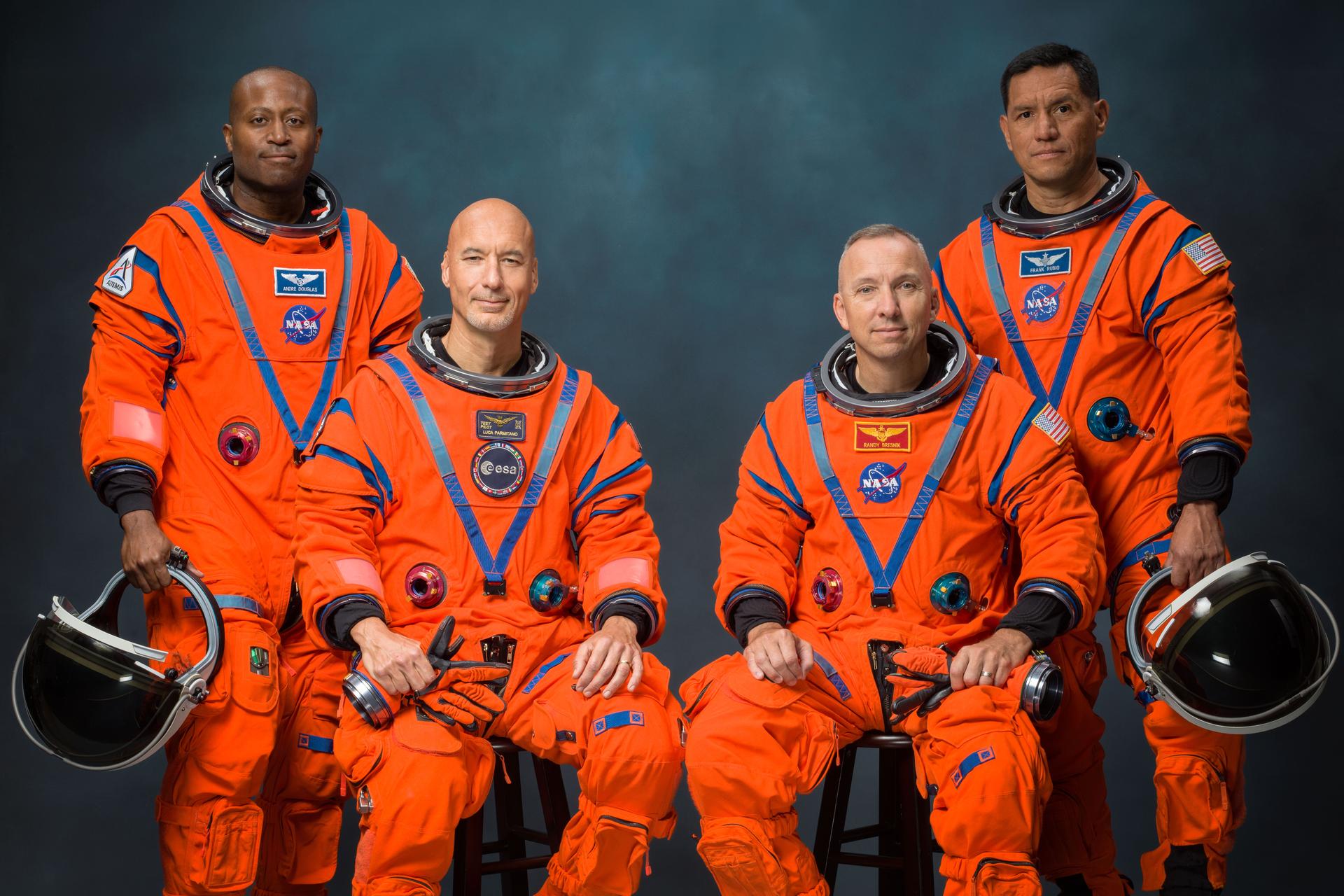
On June 9, 2026, NASA named Bresnik commander of Artemis III, with ESA’s Luca Parmitano as pilot, Frank Rubio and Andre Douglas as mission specialists, and Bob Hines as backup. NASA had already turned the mission from a lunar landing into a test in low Earth orbit. As NASA described it on October 23, 2026, a Blue Origin Blue Moon Mark 2 test article launches first. The crew follows on the Space Launch System and Orion, docks with it and goes inside for about two days of checks. Orion then docks with a SpaceX Starship test article for up to two hours. The plan calls for about 14 days in orbit in 2027, and what the crew learns will help NASA decide which lander carries astronauts to the Moon on Artemis IV.
None of this has happened yet. If Artemis III flies as planned, Spaceflight Firsts will assess three possible firsts: the first people to board a commercially developed lunar lander in space, the first crewed Orion docking, and Bresnik as the first shuttle veteran to fly on Orion. The closest precedent is Apollo 9, which tested the lunar module with a crew in Earth orbit in March 1969. Our article From Spider to Blue Moon compares the two missions.
In his own words
“The most important Artemis mission is the next one.”
“If we do not execute this mission, then we do not execute the lunar landing.”
“Why don’t we wash, rinse, repeat. Do it again in a week.”
Watch
Videos play from YouTube’s privacy-enhanced player and load nothing from YouTube until you press play. See our Privacy page.
Spaceflights
| Mission | Dates | Spacecraft | Role | Duration |
|---|---|---|---|---|
| STS-129 | Nov. 16–27, 2009 | Space Shuttle Atlantis | Mission specialist | 10 d 19 h 16 min |
| Expedition 52/53 | July 28–Dec. 14, 2017 | Soyuz MS-05 | Flight engineer (Exp. 52); ISS commander (Exp. 53) | 138 d 17 h |
| Total | 149 d 12 h | |||
Spacewalks
| Date | Partner | Duration | Main task |
|---|---|---|---|
| Nov. 21, 2009 | Mike Foreman | 6 h 8 min | Grapple fixture on Columbus; antennas and equipment |
| Nov. 23, 2009 | Robert Satcher | 5 h 42 min | Debris shields; oxygen tank and experiment support; ammonia tank prep |
| Oct. 5, 2017 | Mark Vande Hei | 6 h 55 min | Replace a Canadarm2 latching end effector |
| Oct. 10, 2017 | Mark Vande Hei | 6 h 26 min | Lubricate the new end effector; replace cameras |
| Oct. 20, 2017 | Joe Acaba | 6 h 49 min | Cameras, a Dextre fuse and get-ahead tasks |
| Total | 32 h 0 min | ||
Today in Space History
- June 9, 2026 NASA names Bresnik commander of Artemis III.
- September 1, 2017 Bresnik takes command of the International Space Station, the first Marine to do so.
- November 21, 2009 Bresnik makes his first spacewalk on STS-129; his daughter is born in Houston that night.
Education
- The CitadelBachelor of Arts, Mathematics, 1989
- U.S. Naval Test Pilot SchoolGraduate, 1999
- University of Tennessee (UT Space Institute, UTSI)Master of Science, Aviation Systems, 2002
- Air War CollegeGraduate, 2008
- The CitadelHonorary doctorate in aeronautics, 2010
Selected honors
Legion of Merit; Defense Meritorious Service Medal; Meritorious Service Medal; three Strike/Flight Air Medals; three Navy and Marine Corps Commendation Medals with Combat “V”; three Navy and Marine Corps Achievement Medals; Presidential Unit Citation; NASA Silver Achievement Medal; Outstanding Student Award and Empire Test Pilot School Award, U.S. Naval Test Pilot School. Fellow, Society of Experimental Test Pilots.
Suggested reading

Beyond Artemis: Human Expeditions to the Moons of the Solar System
Opens with the Artemis plan to return people to the Moon, drawing on interviews with engineers at Lockheed Martin, SpaceX and Blue Origin, then asks where the same hardware could take people next.
Also worth reading: NASA’s official astronaut biography (PDF). Book links are Amazon affiliate links; Spaceflight Firsts may earn a commission on purchases.
Mission Log
Get the next astronaut bio in Mission Log.
Mission Log is the free monthly newsletter from Spaceflight Firsts: new firsts and milestones as they enter The Record, one from the past worth remembering, and the stories behind them.
One email a month. Free. We never sell or share your address. Unsubscribe anytime.
On the Record
Sources
- NASA: Randolph “Komrade” Bresnik, astronaut biography
- NASA Johnson Space Center: Bresnik biography (PDF, April 2026) and earlier edition with birth date
- NASA: Bresnik biography, awards and honors
- NASA: STS-129 mission page
- NASA: STS-129 MCC Status Report #13 (November 22, 2009)
- NASA: Expedition 53 mission page
- NASA: Expedition 52 return coverage and change of command (September 2017)
- NASA: Astronauts back inside station after second spacewalk (October 10, 2017)
- NASA: Expedition 53 spacewalk successfully comes to an end (October 20, 2017)
- NASA: Bresnik and crewmates return to Earth (December 14, 2017)
- NASA: NASA Marches Toward Artemis III Mission in 2027, Names Crew Members (June 9, 2026)
- NASA: Artemis III mission to test future Moon lander operations (October 23, 2026)
- NASA: Houston We Have a Podcast, Episode 426, Meet Artemis III
- U.S. Marine Corps: The Weight of the Stars (June 11, 2026)
- ESA: CAVES 2011 mission accomplished
- The Citadel: Meet Randy Bresnik
- University of Tennessee Tickle College of Engineering: UT Alumnus Bresnik Selected to Command Artemis III (June 10, 2026)
- Smithsonian National Air and Space Museum: Introducing ISS Science (July 13, 2017)
- NASA: Skylab 4 mission page
- AmericaSpace: Bresnik Becomes First Marine Corps Officer to Command Space Station (September 1, 2017)
- Air & Space/Smithsonian: Amelia’s Astronaut Connection (2009)
- collectSPACE: Amelia Earhart’s scarf flying with photographer’s astronaut grandson (October 21, 2009)
- NBC News/AP: Space dad celebrates birth on Earth (June 2004)
- CBS News: Soyuz brings three station fliers back to Earth (December 14, 2017)
- Associated Press via The Washington Times: Astronauts go spacewalking to grease robot arm (October 10, 2017)
Editorial status: Current through November 22, 2026.
Sourcing note: Time in space is the sum of NASA’s mission durations (STS-129: 10 days, 19 hours, 16 minutes; Soyuz MS-05: about 138 days, 17 hours). NASA rounds the second flight to 139 days. NASA’s current biography lists STS-129 as November 16–29, 2009; the shuttle landed on November 27, which is used here. NASA’s biography dates Bresnik’s ESA cave training to 2010; ESA’s records place the CAVES course in September 2011, which is used here. The 32-hour spacewalk total is the sum of NASA’s published durations for his five spacewalks. “First Marine to command the ISS” rests on NASA’s and the Smithsonian’s descriptions in 2017 and on the publisher’s check of earlier ISS commanders; Joe Acaba, a former Marine Corps Reservist, flew a long-duration ISS mission in 2012 but did not command the station. The quotations were checked against published transcripts and reports, not audio recordings. Artemis III plans may change; they are described here as NASA published them on October 23, 2026.
Editorial and AI Disclosure: This article was developed with generative AI. ChatGPT prepared an initial research brief, and Claude cross-checked its factual claims against NASA and other primary sources and assisted in drafting. The publisher reviewed and approved the final article and retains responsibility for its editorial content. See our Editorial Standards & Practices.
Citation formats
- MLA McNutt, Kraig. “Randy Bresnik: Marine Test Pilot, Space Station Commander and Artemis III Commander.” Spaceflight Firsts, 22 Nov. 2026, www.spaceflightfirsts.com/articles/randy-bresnik-nasa-bio/.
- Chicago Manual of Style McNutt, Kraig. “Randy Bresnik: Marine Test Pilot, Space Station Commander and Artemis III Commander.” Spaceflight Firsts, November 22, 2026. https://www.spaceflightfirsts.com/articles/randy-bresnik-nasa-bio/.